
Cell dissociation

Trypsin
With & Without EDTA

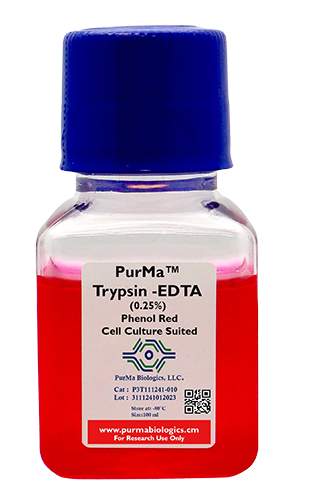
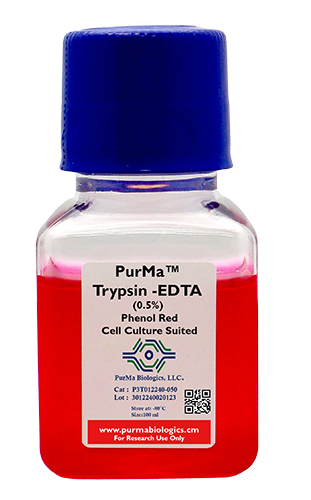
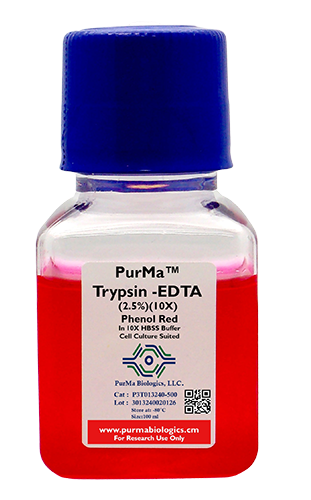
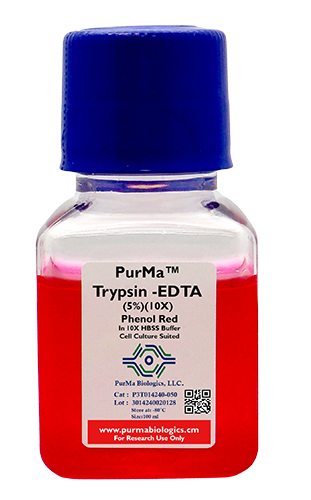
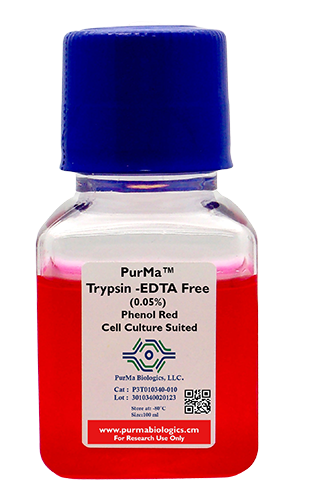
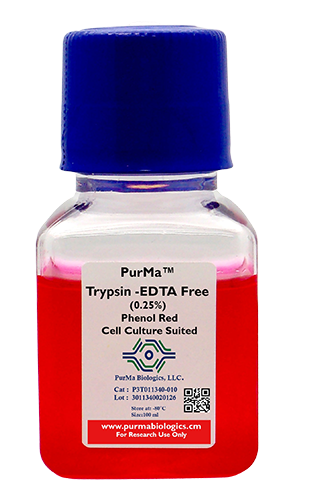
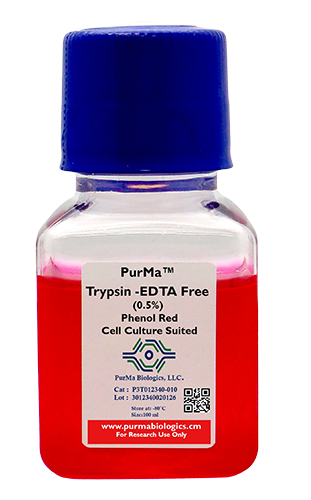
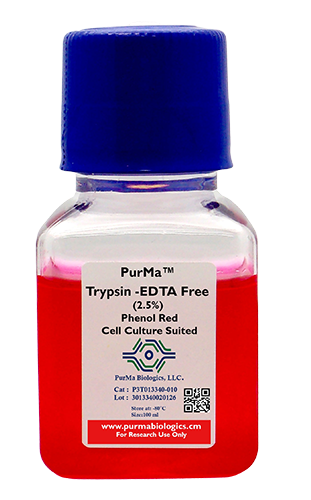
10 ultra-pure trypsin solutions, with and without EDTA, from 0.05% to 5%.

  • HPLC-purified, 99% pure
  • Sterile filtered, tested for mycoplasma and endotoxin
  • With or without phenol red

Choose a strength, with or without EDTA. Not sure which? Read EDTA or EDTA-free or the detachment protocol below.

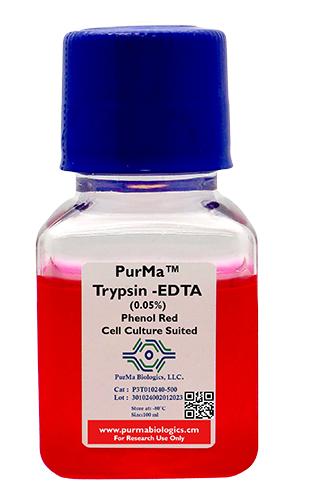
Trypsin-EDTA

5 products
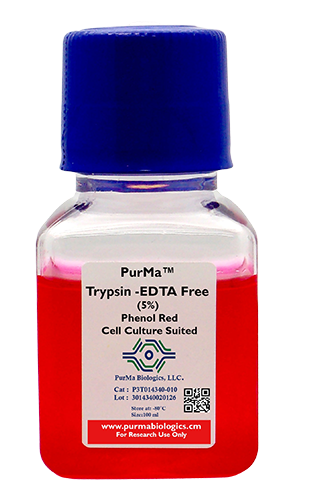
Trypsin, EDTA-free

5 products

EDTA or EDTA-free?

PurMa Trypsin-EDTA contains EDTA, a chelating agent that binds calcium and magnesium ions to speed up cell detachment. It is made in Hanks’ buffer with 2 mM EDTA.

EDTA-free trypsin contains no EDTA, calcium, magnesium or heavy metals, for a gentler, more controlled dissociation. Choose it for delicate cell lines, for protocols where you want to preserve calcium- and magnesium-dependent surface proteins, and for cell lines or experiments where EDTA interferes with the results.

Every PurMa trypsin is HPLC-purified to 99%, sterile filtered through a 0.22 µm filter, and comes with or without phenol red. The 0.05% strength is the gentlest in the range.

What is the protocol for enzymatic dissociation of monolayer cultures?

There are a few important points in dissociating adherent cells. By following the instructions below, you can dissociate cells and set up new plates for maintenance, transfection or other downstream applications while maintaining cellular integrity.

Before you start, consider these points:

  1. For each commercial or primary cell line, follow our guideline, but determine the final, optimized conditions and concentrations empirically.
  2. 24 hours after subculturing, check the viability and health of the cells. This saves time and prevents starting an experiment with a faulty plate. Cell viability should be above 90%.
  3. The presence of at least 1-2 mM EDTA in the trypsin solution is crucial. PurMa Biologics produces trypsin in various concentrations, with and without EDTA, because EDTA interferes with the results for some cell lines and experiments.
  4. Use trypsin prepared with water free of Mg2+ and Ca2+, as these ions compromise the function of the enzyme.
  5. The best temperature for keeping a bottle before first use is -80°C. After thawing the bottle, prepare 10 ml aliquots in 15 ml Falcon tubes, keep them at -20°C, and avoid repeated freezing and thawing. The potency of trypsin deteriorates with each freeze-thaw cycle, which lab personnel might not notice but which affects the reproducibility of results. Every trypsin treatment injures the cells, and their recovery time depends on the potency of the trypsin, so trypsin of varying potency gives varying recovery times.

Procedure

  1. Warm all reagents to 37°C before use.
  2. Spin down the cells and remove the growth medium from the cells.
  3. Rinse the plate containing the cell monolayer with 5-7 ml Mg2+– and Ca2+-free PBS.
  4. Add 3-5 ml of PurMa Trypsin to a T25 or T75 flask or a 100 mm dish.
  5. Shake the flask (or dish) and incubate for 2-3 minutes at room temperature or in a 37°C CO2 incubator. Gently tap the flask or dish against the edge of the bench or any firm object. Check the flask under an inverted microscope. If the cells are not yet detached and single, let them sit at room temperature for another 2 to 3 minutes and continue tapping the flask as described. Keep doing this until the cells are completely detached and dissociated from each other.
  6. Spin down the cells and remove the buffer from the cells.
  7. Add 5 ml of growth medium and pipette well.
  8. Count the cells and pipette the appropriate amount into each flask or dish containing the appropriate amount of your medium of choice with FBS.